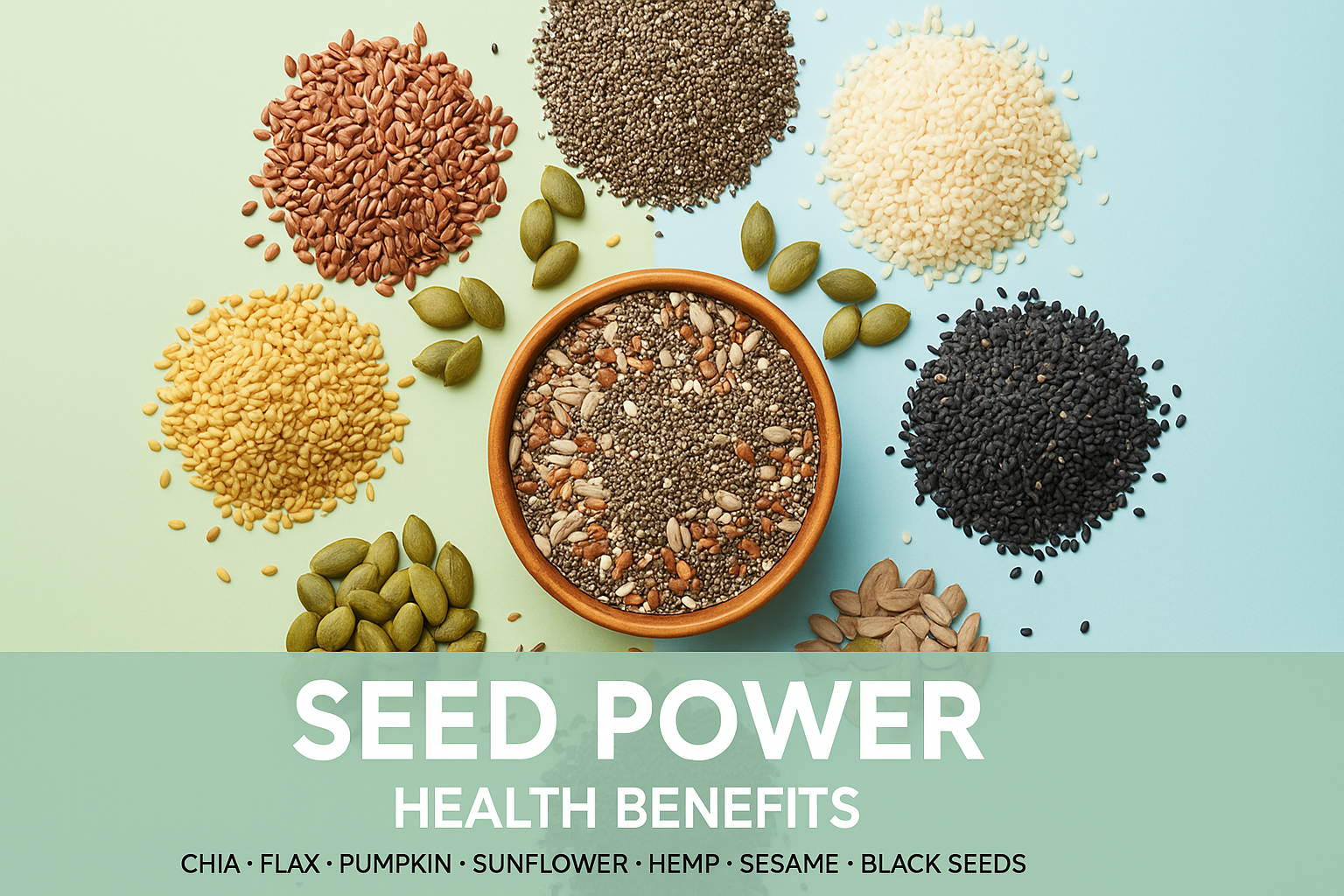
Seeds are nature’s most concentrated source of nutrition, rich in fiber, healthy fats, protein, and antioxidants. But while they are powerful, not all seeds suit every body type or medical condition.
Let’s explore the benefits, cautions, and smart ways to include them in your diet.
1. Chia seeds – omega-3 powerhouse with choking precautions
Nutrition: Omega-3 (ALA), calcium, fiber, antioxidants
Benefits: Supports heart health, digestion, and blood sugar balance
Caution: May cause bloating or choking if eaten dry
Best time: Morning (soaked)
Tip: Mix one tablespoon of soaked chia into smoothies or yogurt
2. Flax seeds – heart-healthy and hormone balancing
Nutrition: Lignans, fiber, omega-3s
Benefits: Improves cholesterol, supports hormone balance, promotes gut health
Caution: Avoid raw seeds; may interfere with hormone or thyroid medication
Best time: Morning or afternoon (ground)
3. Pumpkin seeds – mineral and antioxidant boost
Nutrition: Zinc, magnesium, iron, protein
Benefits: Strengthens immunity, promotes better sleep
Caution: High in calories; may trigger bloating in some
Best time: Evening snack or pre-bedtime
4. Sunflower seeds – brain and heart support
Nutrition: Vitamin E, selenium, B vitamins
Benefits: Enhances brain health, reduces oxidative stress
Caution: Avoid salted versions; overuse may cause acne flare-ups
Best time: Midday or post-lunch
5. Sesame seeds – ancient superfood for bone health
Nutrition: Calcium, magnesium, copper
Benefits: Builds strong bones, lowers blood pressure, supports skin glow
Caution: May cause low BP with medication; allergic for some
Best time: Morning or evening (roasted)
6. Hemp seeds – plant protein powerhouse
Nutrition: Complete protein, omega-3 & 6, magnesium
Benefits: Boosts energy, brain, and skin health
Caution: Excess may cause mild digestive issues
Best time: Post-workout or breakfast bowl
7. Black seeds (nigella) – immunity enhancer with cautions
Nutrition: Thymoquinone, antioxidants
Benefits: Supports immunity, glucose control, and gut health
Caution: Interacts with diabetes and BP medication; may irritate stomach
Best time: Morning on an empty stomach with honey
8. Sabja seeds – cooling digestive aid
Nutrition: Fiber, iron, calcium
Benefits: Helps with acidity, cooling, and weight control
Caution: Avoid in pregnancy; may cause bloating if overused
Best time: Afternoon or summer evening
General guidelines
- Soak or roast before consuming
- Avoid mixing too many types at once
- Keep portions small (1–2 tablespoons per day)
- Store in airtight jars in cool, dry places
Who should be careful
- Seniors: Avoid hard or raw seeds
- Pregnant women: Limit flax, black, and sabja seeds
- Patients on medication: Consult your doctor before daily use
Conclusion
Seeds can truly transform your health when used wisely adding energy, balance, and protection against chronic diseases.
But remember, the power of seeds lies not in excess, but in mindful inclusion.
Always consult a nutrition expert before making them a daily staple.